
Showing posts with label nostalgia. Show all posts
Showing posts with label nostalgia. Show all posts
Tuesday, January 18, 2011
The workings of a teen mind
This is a sketch I had made in my early- mid-teens. I am not sure what spurred me to do that but I suspect Max Brand and his works to have inspired me. You would need to click on the image below to view details.


Friday, January 07, 2011
The ritual of an oil bath
Saturdays were always dreaded. No kid likes to have to sit for an hour, forbidden to touch anything, with a strange feeling of something snaking down your neck - something growing, silky and wet. Oil baths were the most boring ordeals in our house. I hated them from the bottom of my heart because it meant over an hour of sitting through the neck wringing torture of having powerful arms rub the oil into your head - yes, you read it right - into your head. I always felt dad hoped the oil would seep in and perhaps make our hair better or brains work like well-oiled machinery. Oil baths were painful.
They also had their own recipes.
Olive oil was always good but the real veneer only came with gingely oil. If you really wanted it good there was gingly oil boiled with turmeric, black pepper and betel leaves to create a concoction that would give you the finest skin on earth. Didn't quite happen though it could be worse.
The oil had to be cooled but dad, who was the chief superintendent of oil baths, preferred it warm (which was always hot) when he'd rub it into our bones.
Oil baths started from Friday evening with us not planning anything for the first half of Saturday because we had to have a serial oil bath. The bathroom floor was always slick by lunch hour. We (mostly I) would whine about it just being a week since our last wash and dad not even listening to it. I didn't have bad dreams though I think all the bad dreams I can recall might have been through my Friday night's sleep.
Saturday arrived like soiled cotton wool dropping from a mechanic's hand - just this time it wasn't grease but gingely oil. We had two cups, stainless steel, marked for this anointing - one for holding the oil and the other for mixing the shikakai (soapnut) powder with water. This had to be brought to a consistency which made it nearly drip from your fingers but not really pour off. Now that I think about it, perhaps what I really hated was the shikakai powder (Tamilians call is seehakai).
Shikakai burns. Whichever sensitive part it touches, it burns. God forbid it gets into your eyes (and how long can you ask a child to close his eyes and not know what's going on around him), and you can run all over the house and bump into things (because you have shut your eyes tight) only to be caught by the firm hands of someone (dad) and spanked (dad) and hear a voice scold him for being tough on the kids (mom).
Oil baths are, hence, split into two parts: not touching anything (when you are all oiled up) and not opening your eyes (when you are washing the oil off with shikakai). Find me a kid who can spend over an hour not touching anything and 30 minutes with his eyes shut and I will find you nirvana.
Perhaps I assume you understand the travails. Maybe I should explain.
Oil baths start with the deep massaging of oil into your head. While strong hands rub them hard on your scalp you need to hold your neck firm. You cannot slacken as your head might go in and get stuck between your lungs (yes, I knew what lungs were then). There would be brief pauses when I would get to relax my neck but brief was not long enough. I would beg for a timeout and find something to divert attention but soon I had run out of tricks. The hands kept pressing the oil into (or rather out of) my head. The justification was the rubbing vigorously would draw out all the heat from my system and cool me down. Buy me an ice-cream I say! Nevertheless, I could actually feel the heat leave through my head. I never mentioned it for fear of encouraging my father. Trust me when I say that you would hear a soft buzzing when he was done and you just might topple over if someone touched you. My cerebellum was tipsy!
Why start with the head? Because they need to "soak" the longest in oil. Why? Don't know. Maybe because the brain simply needed that much time to realise it was drenched in oil. Then came the face which was delicately handled lest the components get mixed up. Then came the arms. Ladies and gentlemen, there is no known technique to lengthen your arms other than the oil rub ritual. My dad would hold one end of it (the loose end) and with his other hand create a C-shaped vice with his forefinger and thumb and run that up and down the length of my arm. I could hear the shuttle whoosh back and forth over the loom of my hand. Soon my arm would be so hot I could nearly see a mirage near the bend of my elbow.
Eventually we'd cover one part at a time till I was too exhausted to even stand up. Somehow, my father had the energy to bathe all the kids on the block. Once coated in a fine film of oil from head to toe, we had to marinate in it for another 30 minutes or so. That was mandatory else the oil would have no effect. Dad would also pour a couple of drops of oil into our ears to helps clean the inside. French fries wouldn't feel so oily as we did.

Then we were ushered into the bathroom one by one and washed clean with shikakai. We had to use hot water because oil washes off well in hot water (like the grime in your skillet). So a few mugs of hot water, then a full rub-a-dub-dub of shikakai face pack (more like body pack) and then more hot water to wash it all off.
When we emerged from all of this we were too drained to appreciate the cooing by our mother about how fair we had become and how polished we look. We had enough energy for lunch and then dozed off in the noon heat.
Dad thoroughly enjoyed his oil baths. I am told that when my enate grandfather came to meet my agnate one and my father (to propose a wedding with his daughter), my dad was well oiled and busy washing clothes. How that picture impressed the gentleman (may his soul rest in peace) is beyond me, but it did and he was happy to get my mother married to my father (which is obvious). Dad never missed his oil baths.
I would always wonder what there was to it. It would be like explaining the joys of sitting on the banks of the Ganga (without hurling pebbles in) for hours. No child would like it, but like appreciating Shakespeare, one grows into it.
Today (actually, tomorrow) when I ready myself for an oil bath I realise how wonderful it is. For an hour or so, I have an entire room to myself where I enjoy rubbing oil all over. I sing songs or imagine dialogues with friends. I cannot touch anything so no surfing the web or answering phone calls. I ponder over human behaviour and the world in general. I might holler across rooms and have trite discussions with mom. I quieten my mind and observe that stillness. I design recipes and plan tours while vigourously rubbing oil over my shins. Then I let it all marinate, the thoughts, the whole week's exertion, the voices of people on the street below, the doubts, the fears, the music, muscles on the back of neck and slowly trace that gradual unctuous snake traversing down my spine, that excess oil which makes its way into my life on Saturdays.
Sunday, October 03, 2010
A poem, revisited
I was recently asked to explain a poem featured on this blog. After hunting down the poem, I realised I had no clue about it. Then I read through the comments with Parvati-ji's comments helping me a bit (and making me blush with the generosity of compliments). So I wrote back to this gent with whatever I could make of that poem. In case, any of the then commenters or present ones feel/see something different, please do respond with your thought.
Here is the poem: http://inagardencalledlife.blogspot.com/2007/01/for-love-of-me.html
And here is a snippet of the email I wrote, explaining what I understood from this:
The reason why I sent you the link is two-fold; one you can get some hints and two, I don't have a clue why I wrote that poem. Frankly, I usually do not remember why I write anything. Apart from articles which present a perspective about human life and living (aka nonfiction), I have no clue what made me write any story or poem. It gets worse, sometimes I don't even remember having written them. I have had some embarrassing episodes on the blog too when someone actually quoted my own lines and I complimented the commenter for writing them! :-o
So any expectation about my recalling why I wrote it (or any other poem) is quashed. I am going to re-read it and give you what I think and hope that that doesn't influence your mind's eye.
Ok! Done. Here goes. I think the protagonist is a loner and finds solace in words and penning them. He (has to be a "he" because there is a "she" who speaks about marriage) is not merely an assembler of words but someone who connects to them at various levels. He actually specifies the colour of the ink to use for specific words! Interesting chap! And the reason is perhaps this, when the ink is still wet, turquoise can generate various colours when seen in different coloured lights. This is unlike with black or blue or red ink. He seems to use the image of drying both for the actual ink (and the beauty in that) as well as the entire world and emotion that surrounds a word. What I found amazing is that he seems to simultaneously and individually admire and appreciate the ink as a physical entity and the word as a representation of what he feels. Each is given its due, because he doesn't merely mention the quality of ink or paper and then move on to words. Am I making sense? He is able to simultaneously enjoy both. To simultaneously hold two emotions at two different levels is the quality of mad men and I envy them. It is like being able to hate a woman but still appreciate her form and seductiveness, equally truly. Enough on that!
He picks words like "betrayal", "longing" all of which take long to be created (you can never feel betrayed by someone you met an hour ago) and equally long to subside. Another point to note is that these words only make sense when sufficient time has elapsed before or after the realisation of the feeling (of longing or betrayal). Am I making sense? See, if you didn't feeling the longing for a year or so, it doesn't stoke the emotional cauldron of the audience. Try telling a gathering that you longed for success for the past 2 days. They will just return to their gossip. Both of these need time to be spent marinating these feelings.
But then he picks a word - "trickle" which is always a quick phenomenon. A trickle is always short and quick. Ganga doesn't trickle nor the Yang-tse-qiang. Here you see him return to appreciating the ink and the slow drying for a word in itself and for any grand philosophical meaning it brings. Hence, he also takes the liberty of shaping it like a trickle. Playful, alternating and enjoys beauty, both of the ironic kinds and the mundane kinds.
In the second stanza he describes the entire process of ink drying on paper. You would have surely noted that too. When a blob of ink is observed under a magnifying glass it does seem to slowly settle down and runs its length through the fibres of the paper. He does lend it a touch of melodrama when he says "heave and breathe" as if that ink is dying (which it is, if you consider wetness to be the indicator of life). "Desiccated earth" brings us back to the world of human beings where the wetness of genuine emotions and feeling struggle hard and eventually die only to become patterns that others admire (like a love story but not the love in it).
The 3rd stanza is dizzying. He weaves back and forth from words to real world human emotions and back. He seems to be referring to the import of the word "love" when he tells us how he knows that it lives on - because it got wet again and smudged on the paper when he ran a wet finger (clearly, he has been crying) over it! So we start the stanza thinking that he means that emotions like "love" live on but then he returns to the physical word on the paper which seems to be alive because it got wet. But how did it get wet? Because he was recalling a love interest of his which made him shed tears. So the feeling also lives on and not just the physical word on the paper. Back and forth and back and forth...
In the 4th stanza he introduces the woman - (cherchez la femme). Someone who seems to be practical (and hence, boring to him) and who also seems to have tried to bring him out of his affair with words, but has clearly failed. The first line is quite a philosophical truth. It is also the opening line in the Tao Te Ching. She proceeds to elaborate - half in what they portray and half in what they wish to convey. No word (even when entirely read, written or spoken) is the completeness of what was felt. A cow is sufficient to describe a cow, but never complete in conveying the image of the real cow that was seen. She (or he) gives an example of "joy" which can never ever describe the completeness of what a person feels when they confess to being joyous. The last line there is interesting. Need is not put in quotes. Joy was written as "joy" but need was not written as "need" but as need. Hence, the protagonist seems to be giving a rebuttal ( which might imply that "joy" was her example). He seems to be retorting that her needs are always half in their enumeration. Today there is one, and one thinks that that is it, but tomorrow gives you another. But is that need or want? For the person wanting it, it does seem to be need, and hence, the perfect word for rebuttal to her retort that words are just half good. And he replies, "Well, so is all your practicality which seems to only create needs and wants, which are in half too". Husband wife quarrels!!
She then gets personal in the penultimate stanza. She accuses him of not wanting the real thing but being satisfied with words that represent them (lexical porn!?). And she gives examples, but look at how he ties them together to "a cold Autumn night" which seems to represent the state of his soul in spite of having a physical woman by his side. A strange mind it must have been which had something but still couldn't experience. Like walking away from a burning house looking for a warm place.
The last stanza is eerie. How could he know what people said once he was dead? Either that is a technical error on the part of the poet or the protagonist is again playing with words referring to the loss of "life" and not life. It could very well be that, because he "licked to oblivion" the very words he loved, thus ending what he thought was life - the presence of wet words. Not sure. Makes sense?
This is the best I could think. If you ask me again a year from now (and please re-send me the link so that I know what poem you are talking about) I might give you a different story, but isn't that the fun of all literature - Having many stories in one and then many lives to live them! :-)
Since, this was written back in 2007 I can't imagine what made me write it. I don't think I ever felt like the protagonist (2007 or any other year) so this is surely not candidate for "Oh! you must have gone through something like that and hence, your sub-conscious mind wrote it" or any such Freudian crap.
Boy! Actually quite a long email. I realised that only after pasting it in here!
Friday, August 27, 2010
Shabby Post

I know, I know. This is not even a post. It is nothing. It nearly seems like an excuse to link to my own post. Why it also seems like a forced output! I know, I know.
I was just going over some old posts (needed some info) and stumbled on this. I realised how much this post still makes me smile. Nothing seems to have changed since then although so much has happened. So much! Just felt like sharing this:
http://inagardencalledlife.blogspot.com/2005/05/woh-kaagaz-ki-khashti.html
Sunday, August 01, 2010
Ninne Kandu Kothi
Some memories don't stand alone by themselves. They hold hands with and usher in others and before you know it, your entire life blossoms all over again with a different cynosure every time. How amusing it is to find a slightly different life pulled up in front of you every time based on what you started with. Like a vast flat landscape pinched by Providence's hand and pulled up to create different scenes. How much we might try to isolate that one gem from the bag of glass marbles which we reach into! How much we claim to want just that as if it is merely the fall of Autumn, an ochre leaf which we can place between page 216-217, forget for a while and then exclaim in genuine joy in having found it after several years making your day smile with the same sunshine as that day when you had found this leaf. See? How can that leaf come alone to you without the sunshine of that day? That Tuesday, when you had asked L to meet you by the bridge and then she called to tell you that she would be late? When you were angry that she always did that but were forced to smile when that little boy ran behind his Golden Retriever, and in his wake, you saw this one leaf drunkenly trip over every passing waft on its way down to the dry earth? You walked up to it and picked it up thinking you would gift it to L. She would be touched, you had thought. She would be touched to know that you see her in everything in your life. She would, wouldn't she? What happened afterwards perhaps shortens your smile now, but that day... how could it not warm your heart? That day when you ingenuously believed in the goodness of people and the sweetness of romance. That day and days thereafter dragged into your today by a single withered leaf skeleton, holding just a fragment of what it was that day, but fresh with the memories of that day, full, warm and still populated with that funnily fragrant canine still running after so many years. No, ladies and gents, memories aren't as fragmented as we would like them to be.
Though we had a Murphy radio entertaining us through the early days of my life, all I remember of it is the rough cloth which covered the speakers. It was the colour of mustard and honey. I don't even have a picture with it though there is this really cute picture of my sister sitting on it. Yes, the music systems of the yesteryears weren't an iPod and people could actually sit on them (imagine someone sitting on your iPod Nano). Most of my recollections are from the time when we bought a National Panasonic two-in-one music system (the first in the entire family). I recall my uncle brining it with him to Bombay (where we lived) and I enjoyed it. When he was leaving, everyone told me that he was taking it back and what was placed on the shelf was actually a cardboard replica! I wept my heart out and perhaps even hated my uncle for doing this to me. I realised the prank later on, and felt rather stupid though infinitely more relieved that my music system was still with me. I listened to my first Michael Jackson and Madonna tracks on it (blue and white Maxwell brand cassettes).
Though we had a Murphy radio entertaining us through the early days of my life, all I remember of it is the rough cloth which covered the speakers. It was the colour of mustard and honey. I don't even have a picture with it though there is this really cute picture of my sister sitting on it. Yes, the music systems of the yesteryears weren't an iPod and people could actually sit on them (imagine someone sitting on your iPod Nano).
 Most of my recollections are from the time when we bought a National Panasonic two-in-one music system (the first in the entire family). I recall my uncle brining it with him to Bombay (where we lived) and I enjoyed it. When he was leaving, everyone told me that he was taking it back and what was placed on the shelf was actually a cardboard replica! I wept my heart out and perhaps even hated my uncle for doing this to me. I realised the prank later on, and felt rather stupid though infinitely more relieved that my music system was still with me. I listened to my first Michael Jackson and Madonna tracks on it (blue and white Maxwell brand cassettes).
But there are other genres which I was exposed to which seems to have defined my tastes and sensibilities. I would, surely, write about them some other day and would restrict this post to the collection of Ayyappa songs my father had. We rarely chose what was played, when he was around. He was the king of the house. When he wasn't around or when he was involved in something else, we would play some of our choices. Given that we never bought tapes on our own (the concept of pocket money was sacrilegious) our selections were a subset of what he thought was good music albeit not his favourite. Dad's collection of Ayyappa bhajans were nearly all sung by Yesudas (or Jesudas). His voice carried the melody and overflowing love that is vital for singing bhajans. I remember singing those bhajans in words made up to sound like the ones that were being sung. We understood none of the words nor their import, but somehow, in all that ignorance, we recognised Beauty and tried our best to mimic it in the hope that our hours be filled with the same goodness that we heard on tape.
Of the many songs that played through the chambers of my childhood, I will present and translate one of them. I do not know Malayalam (though I can understand the gist of a conversation) and hence, sought the help of a couple of Mallu friends (thanks to you, D). What I offer is to the best of what I carry with me. All errors welcome correction. Before you read my translation, I would request you to wait for the evening and when no one is at home, switch off the lights and listen to the attached song. Close your eyes, too. Once done please read the translation (yes, wipe those tears, too). I agree that the background score is not necessarily the most apt, but that is merely an infinitesimal blemish (like that on the moon). Nevertheless, it is far far more melodious than what is currently boomed out of speakers on roadsides during the Dec.-Jan. months (esp. in Madras). Sheesh!
[Refrain]
Ninne kandu kothi theernoru kannukalundo
Ninne thozhuthu thripthiyadanja kaiyyukalundo
Ninne kumbittaashasamecha shirassukalundo
Ninte naamam paadi maduthoru naavukalundo
Ayyappa...ayyappa...swami ayyappa [Refrain]
Having glimpsed your beauty once, can anyone's eyes be satiated?
Having prayed to your glory, can there be hands that have had enough?
Bowing down to your greatness, are there foreheads which won't repeat [bowing]?
Is there a tongue which sang your praise and felt tired?
Ayyappa, Ayyappa, Lord Ayyappa!
Kandaal mathi vannidumo ninnude komala roopam
Kettaal mathi vannidumo ninnude keerthana jaalam
Kaduppamaanennaalum kerum karineelaadrikalil
Maduppu vannidumo manikanda chavittuvaan veendum
Ayyappa...ayyappa...swami ayyappa (refrain)
When my eyes see, all they see is your soft features.
When my ears listen, all they hear are praises sung to you.
However daunting the stride, I would still climb Karimala (Kari+aadri)
Can I ever tire, Manikanda, to climb your hill (to see you)?
Ayyappa, Ayyappa, Lord Ayyappa.
(Manikandan is one of the names of Lord Ayyappa and it also happens to be one of mine!!!)
Orikkal nin mala pon mala pookiya bhakthanu veendum
Orukkamalle bhagavaane pon padikal kereedaan
Thudichidum nin chaithannya palaazhiyile
Poonthein thirakalil mungi kulikkuvaan kothiyillaathavarundo
Ayyappa...ayyappa...swami ayyappa (refrain)
Having once been blessed with a trip up your golden hill
Aren't they drawn to climbing it (the golden steps) all over again, Oh Lord!?
Oh Chaitanya! In your throbbing ocean of milk
Doesn't everyone want to bathe in those nectar sweet waves?
Ayyappa, ayyappa, Lord Ayyappa.
Somehow, these songs and others remind me of a time when life was a lot simpler and filled with moments of joy. As we grow up, we seem to be empowered to rid our lives of difficulties and fill it with joy, but we seem to be largely incapable. Why else would people always miss those days?
Thursday, August 13, 2009
Making Mama Proud
I was and still am extremely proud of my little boy going up on stage, confidently adjusting the microphone and then reeling out Urdu the way it should be. Ain't he adorable!? So my mom and his mom (who also happens to be my sis) get to argue about who's son was better on stage at this age! Little boy and me ignore them and watch cartoons! We both agree I was a lot cuter though the brat looks at my collection of his pics and tells me "Mama, I am so cute, no?" Runs in the family, I suppose! :-D I will write a post about how I took to the stage and ate all the lipstick sticks that the teachers had brought along.
Sunday, April 19, 2009
Kaanda Batata Pohe
Also known as poha, this is quintessential Maharashtrian snack/breakfast. I suppose the Kannadigas would like to grab it as theirs too but they will simply have to sit back with their akki rotis and the like (anyway, the Maharashtrians have very few dishes to call their own so might as well be generous!). The Kannadigas call it Avalaaki making the dish sound quite complicated.
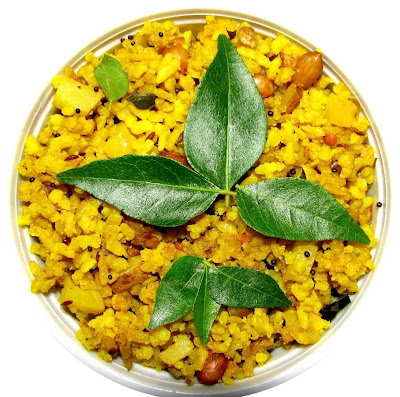
I wouldn't normally be writing about something that one might find anywhere (recipe, gyan, actual dish) but today I prepared this dish as a means to thank my neighbours. It was a sweet surprise when they made fried rice for me (mom's out and they thought I don't know how to cook) for lunch. In a world where creatures you think will help you shirk simple gestures with a "Just because I don't demonstrate my caring does it mean I don't?" and other lazy excuses for their simple incapacity to reach out and be affectionate, it did come as a surprise to me to find decent human beings right next door! :-) So I made this for them. I would have loved to prepare an elaborate meal for them but I had to rush elsewhere and gestures delayed (IMO) lose their value.
Pohe brings back memories of Pune to me. We had what was called Hostel Five Canteen or HCF. Most of us had our breakfast there and it was usually pohe and sometimes with sheera (maybe a post about that later). HCF was just a shack but we loved being there with the "annas" (or as we called the boys/men who ran the canteen). They would always load my pohe with extra roasted peanuts and they recognised our "gang" well. Somehow, we were like a family there.
What follows is one way of making pohe. As I would always say, improvise after you have understood the philosophy of the dish. One can make this without potatoes and/or onion but it is not called pohe then! :-)
Ingredients:

Poha (flattened rice. Here is a picture)
Turmeric powder
Mustard seeds
Jeera (Cumin seeds)
Whole peanuts
Urad dal
Green Chili
Onion
Potato
Curry leaves
Salt
Measures, you would need to figure out. Since I have never measured, it is unlikely I would be able to give you any.
Wash the pohe in a collander ensuring that any husk is washed away. Leave it aside for a while and then wash it again ensuring that the pohe don't clump together. Add turmeric powder to this (after 3-4 washes) and mix well. The pohe should be coated well with the turmeric powder. I usually wash the pohe once more after this but mildly (else all the turmeric will get washed off). Drain, add some salt, mix well and set aside.
In a wok heat mustard seeds, jeera and urad dal in oil. Once the mustard seeds start spluttering, add peanuts, torn curry leaves and chopped chili. Saute for a while and then add finely chopped onion. Once the onion becomes translucent, add a little salt and chopped potatoes (I leave the skin on). Saute for a while and then add a little water, cover and heat. This will allow the potato to cook. Once the water has all but evaporated, add the pohe in batches after squeezing out excess water (and this is important else your pohe will resemble upma). Keep stirring and ensuring that the pohe don't clump together. Mix well and ensure that the pohe get heated/cooked well. You must keep stirring continuously to get a dry texture for the pohe.
Variations include adding grated carrots, coconut and tomato. As I said, it is best that you understand the basics and then improvise.
Susan Boyle - I dreamed a dream
My morning was made (especially when it followed a wonderful Saturday evening and a night filled with delights) when I received an (apt) email from my friend Kartik. I actually woke up collecting my dreams of the night and was happy to see that they were all "fun-stuff". Then I see this email. I love this song for various reasons. One, it is a beautiful song. Two, the lyrics are very pertinent to most people I have met including myself and three, the original story by Victor Hugo was one of the first stories I recall from school (of course, I recall stories my mother told me of the cheating milkman and the crow and fox and the ones I read on my own). I still remember the sketch that was there on the left page of the book of a boat and people alighting/boarding and I loved that story. It taught me one thing: to respect a story completely before judging it and in the process I learnt that Les Miserables was not to be pronounced as Less Misarab-less but Lay Misayrab(l). I suspect my father helped me there and perhaps my sister joined in with her fledgling knowledge of French. That story taught me the need to give attention to detail and I love that story and this song.
Please listen to it here (though this is not the best rendition, perhaps, due to the applause interfering): http://www.youtube.com/watch?v=9lp0IWv8QZY. The reason I ask you to listen to this rather than any other recording is that this video is far more touching than merely the beauty that the song provides.
I Dreamed A Dream (Les Miserables)
I dreamed a dream in times gone by
When hope was high
And life worth living
I dreamed that love would never die
I dreamed that God would be forgiving
Then I was young and unafraid
And dreams were made and used and wasted
There was no ransom to be paid
No song unsung
No wine untasted
But the tigers come at night
With their voices soft as thunder
As they tear your hope apart
And they turn your dream to shame
He slept a summer by my side
He filled my days with endless wonder
He took my childhood in his stride
But he was gone when autumn came
And still I dream he'll come to me
That we will live the years together
But there are dreams that cannot be
And there are storms we cannot weather
I had a dream my life would be
So different from this hell I'm living
So different now from what it seemed
Now life has killed
The dream I dreamed.
For a professional rendition, go here.
Please listen to it here (though this is not the best rendition, perhaps, due to the applause interfering): http://www.youtube.com/watch?v=9lp0IWv8QZY. The reason I ask you to listen to this rather than any other recording is that this video is far more touching than merely the beauty that the song provides.
I Dreamed A Dream (Les Miserables)

I dreamed a dream in times gone by
When hope was high
And life worth living
I dreamed that love would never die
I dreamed that God would be forgiving
Then I was young and unafraid
And dreams were made and used and wasted
There was no ransom to be paid
No song unsung
No wine untasted
But the tigers come at night
With their voices soft as thunder
As they tear your hope apart
And they turn your dream to shame
He slept a summer by my side
He filled my days with endless wonder
He took my childhood in his stride
But he was gone when autumn came
And still I dream he'll come to me
That we will live the years together
But there are dreams that cannot be
And there are storms we cannot weather
I had a dream my life would be
So different from this hell I'm living
So different now from what it seemed
Now life has killed
The dream I dreamed.
For a professional rendition, go here.
Saturday, March 28, 2009
Maavadu/Vadu Maangai
It starts with people looking up at the sky and ponderously nodding (at nothing in particular). They would then appear rather serious and walk towards their favourite chair. Someone would have to enquire into their deep thought (a lot of life in a family is playing along and rewarding everyone with due cues and consideration) upon which the serious individual would remark, "Hmmm. I think the mango season is here. We must visit Mambalam market before the padis empty." Without exception this scene follows the day when the vegetable vendor or the flower vendor had informed this person about the arrival of mangoes in the market!
 Buying mangoes is an art as good as mango-Nostradamus'. I do all that is necessary to make the merchant believe that I know my business. I smell the little 'uns and roll them in my palm and rub them hard and smell them again and give a hard glance at the basket full of green pebbles (Goliath should have simply opened his mouth) and ask him the price while smelling again. Today he said, "Rs. 20 for a kilo". I looked at him disapprovingly and continued smelling. I asked for a knife. He was shocked and he wanted to lower the price or do anything that I wanted. I smelled the mango as if it were a rose (and I a Shah Jehan buying veggies).
 Maavadu is best eaten. With what? Anything or nothing. It is an ideal accompaniment for curd rice (with mustard seeds, and grated carrots and pomegranate seeds and fried urad dal and curry leaves and red chillies and... damn! Now I simply have to eat it!!) but goes well with rava upma and many other dishes. Enjoy!
Children would always be in awe of this person who is like the mango-Nostradamus. In all likelihood the kids don't know who Nostradamus was but they know what tongue-clicking green mangoes are, especially the ones that fit snugly in their fists. They always try to make the loudest clicks after a bite and suddenly a well populated and poorly guarded house sounds like the stampede of the stiletto brigade. Mangoes herald a lot more than mere taste and lazy afternoons with fistfuls of green gold; it speaks of summer vacations and visiting relatives and pickles. So now you know why mango-Nostradamus is so loved by the children of the house!
If you are wondering, why I haven't rushed into the pickle recipe, then you are probably new to this blog! You should probably thank your stars that I am not discussing browser performance and how Safari 4 is better than the previous version. Yes, you guessed it - this post is written within the frame of Safari 4 though I am always an Opera loyalist (can't help it with over 4000 bookmarks in there).
Maavadu is a popular pickle in South of India. It is debated as to which state should own rights to it, and I have just concluded that good, tasty maavadus belong to me. Simple. To those who think pickles can only be made by Priya, MTR, Bedekar, Ruchi and Mother's Recipe I have only one question to ask: How did the farmer manage to get the whole 250 ml of OJ into that orange ball?
Maavadu is made from whole, small raw mangoes - bonsai mangoes. They are probably the size of the pebbles David used against Goliath or in simpler terms, the size of a malnourished and out-of-shape golf ball. They are small, that's it. How else should I try describing that!? I have always had an issue with describing size. I could be pointlessly accurate in giving you the volume of the mango (314.594 cc) or I can describe them to you. Problem with qualitative description are that most of them depend on the dimension of your organs (easy! I mean palm and mouth and such). E.g.
- You could probably hide them in your palm. Issue: What is the size of your palm?
- 3 of them would fill your mouth. Issue: What is the size of your mouth. Another issue would be 3 of what!?
- If you pierced a moderately ductile needle through 2 of them and bent the metal between them, they should be just large enough to cover your eyes when you do not have the oh-my-god-she-really-did-that? look on your face. Issue: What on earth did she do?
So do understand my helplessness and humour me. These raw mangoes are small, about the same size of the pebbles David used to kill Goliath, measuring 314.594 cc (no, not Goliath!).
These mangoes come in two varieties. One is the rotund ones which are mostly what bounce on your mind's canvas when someone says "small raw mangoes" and the other is like the space between two "S"s, vertically offset and fused at their ends. The latter are called (in Tamil) kili-mooku (which means, parrot's nose or beak, the correlation is probably what the parrot knows! Sorry PJ). Kili-mooku pickles are tasty too but the mangoes are less juicy and more like a badly chewed gum. I like both varieties (and the gross descriptions are purely to discourage you from asking me for samples). Who am I kidding!! I am crazy about both varieties though my personal preference is for more flesh (guys! I am talking about mangoes. Yes, the edible kinds). The reason is that when you nibble at the rotund ones, the ooze with salty nectar which is why they are most loved. Frankly, if the previous line aroused you, it was unplanned!
I believe the best way to prepare maavadu is by recalling all that you did the previous year and how rewarding it had been. Pickles aren't pasta which in turn aren't crunching on a carrot. Pickles take a lot of energy and a lot of time. Results are typically known only in 10-15 days (and my mother snapped at me for demanding a tentative date when they are good to eat: What kind of an idiot would want a deadline for pickles!? They are ready when they are ready!! Now you can thank me for the more accurate descriptions in this blog). Pickles are passed down generations. Actually the recipes are! I learnt the recipe from my mom who learnt it from everyone except her mom and I have no clue where her mom learnt it from!
So this is how the story goes. My mom and dad were traveling in their early days as a couple (and in India, a couple then meant that they were already married). They reached Bombay (where all good things used to happen) and were supposed to stay at a friend's place. This friend was actually my grandfather's friend. They did stay there and my mother learnt her first version of maavadu from the lady of that house (yes, those were times when the ladies of the house knew how to cook!).
Few years later (when yours truly was already born and critiquing the food made at home) back in Bombay there was (I am sure she is no more) a kind lady whom we called "Vembu maami". To my child-mind (which hasn't developed much since then) it sounded irrational why she should be named after the bitter flowers of the Neem tree (in Tamil, those flowers are called Vepampoo and I would in my hurried talk pronounce Vepampoo and Vembu quite alike). I would also imagine her giving my mother the horribly tasting rasam (which we call saaramudu) made with those flowers. So I searched in vain, some bitter facet of that lady whose face I have now forgotten (I do remember their house and her entering the bedroom with the balcony where I was sitting awaiting sweets and pampering).
Vembu maami polished the earlier version of the recipe for my mother. The earlier version was a little saltier and not to everyone's palate. What follows is that version. It will follow, trust me.
Buying mangoes is an art as good as mango-Nostradamus'. I do all that is necessary to make the merchant believe that I know my business. I smell the little 'uns and roll them in my palm and rub them hard and smell them again and give a hard glance at the basket full of green pebbles (Goliath should have simply opened his mouth) and ask him the price while smelling again. Today he said, "Rs. 20 for a kilo". I looked at him disapprovingly and continued smelling. I asked for a knife. He was shocked and he wanted to lower the price or do anything that I wanted. I smelled the mango as if it were a rose (and I a Shah Jehan buying veggies)."Get me a knife."
He complied but stood his distance. I asked him to place the knife down as one doesn't hand the knife from one's hands to the other (it makes enemies of such folks, or so the belief goes). He carefully placed it in the empty basket without taking his eyes off me. I whipped the blade out and cut a sliver (actually, more than that). Holding it between blade and thumb I dropped it in my mouth. One bite and I was dying to click my tongue, but they were watching. I slowly nodded and asked him (yes, the bewildered one), "How many padis in a kilo?" For the uninitiated, padi is a measure which isn't standardised by the BIPM (and it never will be). Padi is pronounced puh-dee like maavadu is pronounced maa-va-du :-D
The poor guy thought I was from some arcane society out to mark him for trading in mangoes or something, because he swore an apology for not knowing what a padi was. I kicked myself for listening to my mom (well, she's twice my age and belongs to the era where an anna made sense) and asking him what she had asked me to ask him. He turned around and asked the majordomo. The latter clarified that they sell by the kilo. I said that I knew that but how many padis would there by in a kilo or conversely (and I actually said "conversely" in English because my Tamil or their Tamil wasn't good enough to handle "conversely" in Tamil). He said he didn't know so I smelled the mango again before instructing Mr. Scared Pants to give me 2 kilos. All the while I prayed that my mother doesn't kill me for picking mangoes unworthy of a pickle. I picked the pebbles myself and ensured that they were nearly all the same size (yes, 314.594 cc).
As I said, purchasing mangoes for maavadu is quite an ordeal. To the cynical few, all of the above could be accomplished within two minutes: Reach the shop, touch a few of the round ones (mangoes, guys), ask for price, buy two kilos, get back home and be scolded anyway! How boring! I am sure these are the same folks who wonder "Why isn't he giving us the recipe yet!?" God!
The funny thing with the market is that mangoes with about an inch or two of stalk are priced at 70-80 which doesn't make sense. Nobody uses the stalks for anything beside garbage weight, so why the higher price? The storekeepers were dutifully questioned to which they replied, "Because they have stalks!" Now you know!
The mangoes should be washed well and allowed to dry naturally on a dry cloth. I added naturally because I don't wish to field questions like "On a drying bed?", "On a desiccator?". Naturally, under the ceiling fan, if you must, on a dry piece of cloth. Ensure that there is atleast a stub of stalk left on each mango. Oh! BTW, I passed the mango buying test. Of course, I knew very well how to buy the right mangoes, and...
Once they are fairly dry, here is how your proceed (oh! yes, the recipe indeed):
For 10 Kg of mango, use 1 Kg of crystalline salt (that is white salt in sizes bigger than table salt but not bigger than the biggest gem you own. If you have really big gems, what are you doing reading this blog!? See? Same problem with describing sizes), 1 Kg red chili powder, 0.5 Kg mustard powder (not Dijon) and about 10-12 tbsp castor oil and about 2-3 tbsp turmeric powder. There are different ways to prepare this and I am giving you how my mother does it before getting into variations (some of them untested). Since you are never ever going to try with 10 Kg. let me talk in smaller measures. For about 2 Kg. of mangoes, use 200 gms of salt, 200 gms of red chili powder a little over 100 gms of mustard powder and about 2 tbsp of castor oil and turmeric powder by experience! Mom adds the mangoes into a large vessel and then gradually adds salt, tossing and turning the mangoes around (never ever use your bare hands as it might spoil the mangoes). Once that is done, in goes the chili powder with pauses and tosses and turns. Then follow mustard powder, castor oil and turmeric powder. All the while the mangoes should be tossed and turned to evenly coat the mangoes with the powders. Please rest assured that this current state of the mangoes is not how things are going to be in the days to come. I shall try to explain how.
Before I embark on that, a couple of points to note. As mentioned, never use your bare hands (though in India nearly everything is done with bare hands, pickles are an exception). Something about your perspiration or glandular secretions spoils the mangoes. Secondly, table salt is never used for pickles. My mother blames it on the iodine. I am merely quoting and following so I too shall blame iodine. Down with iodine! Thirdly, never let the pickles rest in a metal or wooden container. The latter will absorb all the water (oh! there will be lots of that) and the former will get corroded. Please remember these.
The typical container used for pickles is the Kerala Jaadi (as we call it) or the Bharani jars. These are beautiful jars made of porcelain in dual tone and are very very good for containing pickles. These have been in use for at least several decades if not a few centuries (and I exaggerate). One could also use glass jars but then the mystery of maavadu is lost. You will get to see the water collect and the mangoes soften and all the wonderful things that are best left as a mystery. So let's all use the Bharani jars. They come in various shapes and sizes and are quite aesthetic too. 
Once the pickle-amateur has been transferred to the jars, cover the mouth with a clean, dry cotton cloth and fix the lid tightly. I wouldn't recommend using plastic or anything synthetic. Leave this aside. Every day for the next 10-15 days (or as the high priestess says, "Deadlines!?") one must open the jar and mix the contents properly with a spoon/spatula. Cover with the cloth and fix the lid tightly. Do not forget the last bit (no, the eating come later). After about a week or so, it is recommended to taste the pickle. Only the experienced tongue knows the exact state of pickleness and can gauge the number of days left for pickling. It can, and I assure you, will vary.
There will be water (as God said to Adam when Eve broke her nail and was about to burst out crying). Osmosis assures you that the moisture content of the mangoes will be released. The salt attracts moisture too. All of this and the magic of maavadu assures you a lot of water. Soon your pickle will no longer remotely resemble the dry stuff you put into the jar on Day 1.
There are variations (as God said to Adam when he didn't understand what Eve meant when she said that she didn't want the parrot-green fig leaf but the teal fig-leaf as was shown on the Vogue magazine cover). Some prefer to add a bit of boiled and cooled water to the initial mixture. This creates more "gravy" which allows for mixing with rice. Some maavadus are not mustard based. Some people mix all the powders together and then pour it over the mangoes (like it matters). Some people make an even paste and "gravy" of the powders. Some people use fenugreek powder. Some people buy Mother's Recipe Vadu Maangai (oh! btw, maavadu and vadu maangai are the same but maintained distinct to confuse the tourist who lands in Madras). The latter category of people are ignored until when they offer some of their purchase. You take it and ignore them again till you are tired of ignoring them.
Maavadu is best eaten. With what? Anything or nothing. It is an ideal accompaniment for curd rice (with mustard seeds, and grated carrots and pomegranate seeds and fried urad dal and curry leaves and red chillies and... damn! Now I simply have to eat it!!) but goes well with rava upma and many other dishes. Enjoy!I just realised that I need to beg some other bloggers for pictures of mangoes, pickles and the bharani jars. Mom simply refused to let me take pictures. Reason: The pickles will get spoilt if pictures are taken (it is some interesting combination of the evil-eye, photosensitive mangoes, her touch and a few other phenomena that are best not discussed).
Thursday, March 19, 2009
Of Pains and Medicines
I have this fetish for not taking any medicine. I mean it. I try to find some excuse to not take medicines (unless my hand has a fractured humerus which wouldn't be one bit humourous). I do apply "home" remedies (though the quotes should actually be around remedies than home) like warm brine gargling, fasting, kashayam (that is a decoction of pepper, dried ginger and a few other ingredients), honey-lime in hot water, etc. but anything that comes as capsules or tablets repels me. If I simply have to take a pill I would, but I would avoid it as far as possible. Just yesterday I was thinking how much of a misfit I am in this family (or any family)!
My dad loves to tease. Maybe I inherited those genes though not his fortune of being surrounded by people who had a sense of humour. I really wonder why people are so touchy and stupid. Where was I? Aah! So my dad would tease his father-in-law (my grandfather) about how he (the older he) would prescribe an ointment called "Jamback" (or that is how everyone pronounced it) for nearly everything. He (the younger he) would quip, "I am sure if my bike refused to start, he would rush out with a Jamback!" My mother would try her best to support her father but she was no match for mine. I never saw this scene because I was either nowhere in the picture or was busy wetting some piece of cloth under me only to hear half a dozen "Tcho Tcho" cooed in unison (or worse, out of sync).
Pan to the days when I am older and wetting less pieces of cloth. Camera zooms in on my father who hears about my sprain and he sighs before prescribing, "Sloan's Balm". That was the dread of my life. Dad always prescribed Sloan's Balm. Not sure I have met anyone in my life who uses Sloan's Balm. It happens to be a product of Pfizer and still available at the chemist's store (no not the same bottle). I used to think that Balm was Bomb spelled by a 2 year old (but he'd have to be one smart 2 year old to get that spelling). The damn thing used to burn wherever it touched. I would scream my lungs out whenever dad applied it on a shin or elbow. Of course, my sister screamed too though I am not sure whether dad did. Perhaps he had a milder version of it. For him every pain could be cured by Sloan's "Killer" Balm. And when it burned, he would assure us that that was a good sign: if it burns, then there is surely some reaction and the pain was being healed. As you will soon see, this was just the start of a bad childhood.
Then there were cuts and bloody wounds. Fortunately, Sloan's Balm wasn't recommended for those. Tincture of Iodine was. That burned too. The explanation was the same. The urge to run away was the same and the screaming amplitude was also the same. Dad oscillated his prescriptions between Hell and Hell. If I ever got a cut, I would rush to a nearby bush and (of course not, I was a kid then. Gosh! You and your imagination!) pluck the leaves, crush them and apply the juice of that to my wound. The wound would at least stop bleeding and I would act as if nothing happened (though with shorts, it was difficult to cover wounds). That is where I had my first lessons in creativity. I would do all kinds of things to avoid being cornered. I would come home dirty (who wants to frisk a filthy kid?), or wear tracks and claim to have done my practice for the athletics meet. I had to distract parents with something weird and some more (can't afford to list them out).
A couple of days ago I suddenly recollected all this and was laughing my head off. Everyone in my family takes medicines when required, save me (hence, the misfit mentioned earlier). The ladies (and here I include extended family) seem to enjoy it. I wonder what gave my dad the right to tease my granddad (though everyone has the right to tease anyone). It must have been fun to watch him tease grandpa and then have someone else tease him. I don't think any of this influenced my preference against medicines. I have always found it annoying to submit to a bunch of chemicals when I feel my body is capable of healing itself. I never could word it thus when I was younger, but as I grew older (and the process continues) I realised that I found it lazy not to let the body understand the ailment and heal itself. I watched animal and learnt to lick my wounds (and then wash them as we don't lick anything and leave it unwashed). But that apart, I still find it amazing when people reveal their favourite cure-all! They will swear by it and actually are offended to hear that it didn't help someone: "Maybe you didn't take it regularly". What's yours?
My dad loves to tease. Maybe I inherited those genes though not his fortune of being surrounded by people who had a sense of humour. I really wonder why people are so touchy and stupid. Where was I? Aah! So my dad would tease his father-in-law (my grandfather) about how he (the older he) would prescribe an ointment called "Jamback" (or that is how everyone pronounced it) for nearly everything. He (the younger he) would quip, "I am sure if my bike refused to start, he would rush out with a Jamback!" My mother would try her best to support her father but she was no match for mine. I never saw this scene because I was either nowhere in the picture or was busy wetting some piece of cloth under me only to hear half a dozen "Tcho Tcho" cooed in unison (or worse, out of sync).
Pan to the days when I am older and wetting less pieces of cloth. Camera zooms in on my father who hears about my sprain and he sighs before prescribing, "Sloan's Balm". That was the dread of my life. Dad always prescribed Sloan's Balm. Not sure I have met anyone in my life who uses Sloan's Balm. It happens to be a product of Pfizer and still available at the chemist's store (no not the same bottle). I used to think that Balm was Bomb spelled by a 2 year old (but he'd have to be one smart 2 year old to get that spelling). The damn thing used to burn wherever it touched. I would scream my lungs out whenever dad applied it on a shin or elbow. Of course, my sister screamed too though I am not sure whether dad did. Perhaps he had a milder version of it. For him every pain could be cured by Sloan's "Killer" Balm. And when it burned, he would assure us that that was a good sign: if it burns, then there is surely some reaction and the pain was being healed. As you will soon see, this was just the start of a bad childhood.

Then there were cuts and bloody wounds. Fortunately, Sloan's Balm wasn't recommended for those. Tincture of Iodine was. That burned too. The explanation was the same. The urge to run away was the same and the screaming amplitude was also the same. Dad oscillated his prescriptions between Hell and Hell. If I ever got a cut, I would rush to a nearby bush and (of course not, I was a kid then. Gosh! You and your imagination!) pluck the leaves, crush them and apply the juice of that to my wound. The wound would at least stop bleeding and I would act as if nothing happened (though with shorts, it was difficult to cover wounds). That is where I had my first lessons in creativity. I would do all kinds of things to avoid being cornered. I would come home dirty (who wants to frisk a filthy kid?), or wear tracks and claim to have done my practice for the athletics meet. I had to distract parents with something weird and some more (can't afford to list them out).
A couple of days ago I suddenly recollected all this and was laughing my head off. Everyone in my family takes medicines when required, save me (hence, the misfit mentioned earlier). The ladies (and here I include extended family) seem to enjoy it. I wonder what gave my dad the right to tease my granddad (though everyone has the right to tease anyone). It must have been fun to watch him tease grandpa and then have someone else tease him. I don't think any of this influenced my preference against medicines. I have always found it annoying to submit to a bunch of chemicals when I feel my body is capable of healing itself. I never could word it thus when I was younger, but as I grew older (and the process continues) I realised that I found it lazy not to let the body understand the ailment and heal itself. I watched animal and learnt to lick my wounds (and then wash them as we don't lick anything and leave it unwashed). But that apart, I still find it amazing when people reveal their favourite cure-all! They will swear by it and actually are offended to hear that it didn't help someone: "Maybe you didn't take it regularly". What's yours?
Saturday, August 02, 2008
My Grandmother
I know this starts out rather like an essay one would write back in school! Well, I wish I were back in school with less to bother me about the adult life of mistaken importance! But I really want to write about my grandmother (paati as she is called by her grandchildren). There were two recent incidents which reminded me of her and I have no clue why.
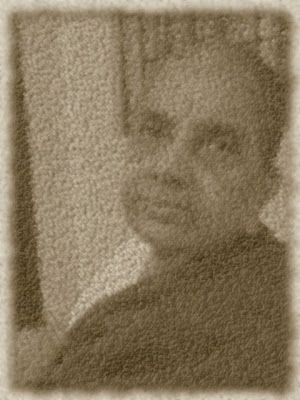 I couldn't help but smile at this song-conversation and it reminded me of my grandmother. I am told she was married when she was 13 or so. I wonder what were her thoughts that ran through her mind when she was told that she will have a man as her companion for the years to come, a man much older than her. Did she think of her dolls, her mother, her running around the well to the rear of the house, her future, her present, her past? Did she blush? Did she know why she was blushing? Did she know what it was to get married? Did she know that she would grow old to have grandchildren write about her with a mottled photograph of hers!? Did she know what she was getting into? Did her husband ask her the same thing that Tevye asked Golde? What would she have said? I am sure she would have smacked her forehead and continued swirling the ladle over the pan painting a white disc of rice batter. I am sure she must have smiled in between and shook her head at the sweetness with which her husband of 25 years asks her something that really has not much meaning anymore and is just a passing note. But still he asked. She must have smiled again before realising that she forgot to turn the dosa. She would eat this slightly charred one.
My cousin (who is 11) insisted on watching Fiddler On The Roof (which she has seen several times before). I had already seen it but that confession bore no weight on the ears of the little girl who considered doing things together as a way of bonding. I was touched by her simple outlook which I was also raised in and hence we decided to watch the movie together (with a lot more people in the van). I honestly, find a repeat telecast boring unless the movie is one like the Godfather or Terminator. Nevertheless, there was one bit that caught my attention and made me think of my grandmother. There is this one song where Tevye asks his wife Golde whether she loves him. This is how it goes:
Golde...Do you love me?Do I what? !Ssh!Do you love me?Do I love you?Well?With our daughters getting marriedAnd this trouble in the townYou're upset, you're worn outGo inside, go lie downMaybe it's indigestion.Ah, no, Golde, I'm asking you a question.Do you love me?You're a fool.I know.But do you love me?Do I love you?Well?For 25 years, I've washed your clothesCooked your meals, cleaned your houseGiven you children, milked your cowAfter 25 years, why talk about love right now?Golde.The first time I met youWas on our wedding day- I was scared - I was shy- I was nervous - So was IBut my father and my motherSaid we'd learn to love each otherAnd now I'm asking, GoldeDo you love me?I'm your wifeI know.But do you love me?Do I love him?Well?For 25 years, I've lived with himFought with himStarved with him25 years, my bed is hisIf that's not love, what is?Then you love me?I suppose I do.And I suppose I love you, tooIt doesn't change a thingBut even soAfter 25 yearsIt's nice to know
 I couldn't help but smile at this song-conversation and it reminded me of my grandmother. I am told she was married when she was 13 or so. I wonder what were her thoughts that ran through her mind when she was told that she will have a man as her companion for the years to come, a man much older than her. Did she think of her dolls, her mother, her running around the well to the rear of the house, her future, her present, her past? Did she blush? Did she know why she was blushing? Did she know what it was to get married? Did she know that she would grow old to have grandchildren write about her with a mottled photograph of hers!? Did she know what she was getting into? Did her husband ask her the same thing that Tevye asked Golde? What would she have said? I am sure she would have smacked her forehead and continued swirling the ladle over the pan painting a white disc of rice batter. I am sure she must have smiled in between and shook her head at the sweetness with which her husband of 25 years asks her something that really has not much meaning anymore and is just a passing note. But still he asked. She must have smiled again before realising that she forgot to turn the dosa. She would eat this slightly charred one.
Currently, I am re-reading the Lost Horizon. There is something about the promise of peace and tranquility that draws me to this book. It is perhaps the essence of the strife that many people go through and find no escape from. It is perhaps a dream-come-true for many people to find themselves suddenly in a Shangri-La. I had read this when I was a boy and for unnamed reasons, I found myself smiling at this book and Conway's thoughts. Today, I find myself nodding. It is amazing how a book - the same text, the same words, the same characters and expressions - carries a more telling if not entirely obvious and recognisable import over time. Time sure is a funny element in the grand scheme of things. It can take the same element and transform it into something (perceived) disgusting, wonderful, beautiful, all over a period of time. And Shangri-La plays exactly with this very same concept of the tell of time.
In this book there is a conversation between Conway and Chang (about another character called Lo-Tsen):
Conway: She was deeply attached, I suppose, to the man she was to have married?Chang: Hardly that, my dear sir, since she had never seen him. It was the old custom, you know. The excitement of her affections was entirely impersonal.
Again, I couldn't help but think of my grandmother. She too must have had an excitement which was customary or demanded of the situation for a reason and an individual she had hardly seen. Her excitement, if any, would have also been entirely impersonal. What could she have imagined? She had no way of knowing what he would have liked. She had no way of knowing whether his hands would be rough or soft. She had no way of knowing whether he would sleep off when she recounted tales of how she loved playing pallaanguzhi and how many games she had won with her sisters. And if he did sleep, would he snore?
It is indeed amazing how in spite of being handed over so much unknown details, the woman still managed to run the family well. She mothered six children and loved each one of them differently, always having to answer another child's question as to why she didn't love him/her as much as that other child! In all this, she also had to manage her husband and his ways. The amount of faith people placed on time's remedy has vanished over generations. People believed in tradition and were aware of a husband and wife's duty and conduct. Each one conducted themselves in the manner expected thereby letting family and life go on smoothly. Today we hear of how women were dominated and suppressed in those ages. I asked my grandmother whether that happened to her. She said that she had taken the responsibilities of a family and knew what was best for all and herself.
I, of course, knew her only when women become a sort of a termagant with their now aged husbands. Something in most couples I have seen is that the wife may be sweet and docile in the initial few years or so, but once the kids are grown and man has mellowed due to age, she takes on his facade and runs the house and her husband with a bossiness that one normally associates with men. If the woman was already the bossy person from the start, then god save the poor man!! I heard how tough my grandfather was with everyone and would sympathise (although late) with my uncles and aunts. So, my grandfather was already that docile man which time makes of an average husband and my grandmother was already the boss of the house, when I recall my first conversation with them. But I was privy to her many thoughts. I enjoyed spending time with her and listening to her stories of years I had never seen. She would tell me how her world was and how her house was set in a particular village. She told me about her mother who was widowed early but still ran the household and managed the family land very well. She told me about her sisters and how they got married. She boasted about the compliments she used to receive for her looks. She never bossed over me and when she wanted to assure herself that she had the right to boss over me, I let her. Isn't all relationship an illusion of what one knows and what one wishes to grant? I used to tell her things that happened in school and then at work. She never rebuked my grandfather or ill-treated him, but she was his wife so she badgered him around like most wives of that age do. I think he liked it too - the attention that she gave him.
Paati was terribly efficient and good at managing the house. She had several pins in the air while she managed the chores of the house and other details. I think that is why my grandfather respected her and loved her, because it always feels good to have someone share your responsibilities and do so without having to beg them to do it. My father was also very impressed with my paati and would always say that had her parents let her study more then she would be running some organisation right now. Paati would simply blush (she wouldn't smack her forehead at her son-in-law) and rush back to the kitchen under some pretext.
Even today, paati provides me with surplus advise about the way of life and how to lead it smoothly. She doesn't realise that the world has changed and people are mostly only interested in themselves, and traditional ways of the family or society or propriety are no longer recognised, let alone respected. She still thinks that everyone is as simple and sweet as the girls she knew in her days. Girls who must have rushed up to her and giggled with her for no reason upon knowing that their friend was getting married. They must have all giggled and poked her in the ribs and she would have blushed, albeit an impersonal blush.
She doesn't blush much now. She walks very slowly unable to hear her own footsteps well and afraid that the lack of noise portends instability and that she might fall. She stares vacantly into space often and wants to know what everyone is talking of now. She has no husband to boss over and all her grandchildren have grown too old to have their ears boxed in affection. It has been a long time since she could reach my ears anyway! She still pinches me once in a while when I tease her. She has lost all strength to her family and life, and regains it every time when one of her children or her grandchildren comes and sits next to her because they wished to talk to her and keep her company. She smiles and shakes her head in disbelief that a young man would still be interested in talking to an old (nearly) toothless lady. Then she looks just like she would have when her husband asked her what Tevye asked Golde. But for what is already lived and realised, do questions matter?
Saturday, December 01, 2007
Through the hole
I think it was the summer of 1989, for it is nearly always summer in Madras. I was in 7th grade then and, according to a lot of friends, haven't changed much. We followed this rather arcane curriculum of numbering our subjects as 1 and 2 (Math 1, Math2, English 1, English 2...) and I fail to recall which one of those numbers applied to the class where we were asked to prepare a pinhole camera. The mechanics of this was simple: Get a hollow cylinder (which should be called a pipe, but our teachers thought that they were being quite scientific as against sounding like someone from the hardware store). Seal one end with butter paper (and we actually applied butter on standard paper when any oleaginous substance would have suited the purpose) and the other which a thick material. Poke a pin-hole through the thick material and pray that you get an image of some distant object upside down on the butter-paper.
We had decided that we should employ talcum powder cases (like that of the nearly erstwhile Cuticura, or of Gokul Santol)as one end would be shut anyway. We did a lot of hunting and excitedly constructed the contraption for, to a child's mind, any activity with expensive names like camera, engine brought a lot of importance. I think I chose a Gokul Santol dubba (I think I did so because I didn't want to have anything to do with a Kutti-Cura... kutti in Tamil means small).
When the d-day arrived, everyone proudly held their cameras in hand (one girl had even painted hers! I am glad there wasn't a pink bow to it). Some of the fractious boys (and every class had its share) had bullied the students of the other classes to lend theirs. Some of the lazy ones borrowed from their friends in the other "divisions". There was a lot of whispering and speculation as to who possessed "honest" cameras and who were the ones who had "stolen" (for anything non-honest was considered stolen to our inarticulate minds) cameras.
The teacher walked in. She was a rather puny lady with a voice that broke with least warning, resembling a little puppy on ice - running fine a bit and then skidding. She demanded to be informed if anyone had borrowed cameras from students in other divisions. No one spoke a word. Some students got up to say that they didn't finish their project and these were the ones who had secretly vowed to turn informers.
Things went as expected. Some student would be called, he would present his piece. If it was an honest camera, he got some marks depending on the clarity of the tree with its root heavenward on the butter-paper. If it was stolen, some student would blow the whistle. Then there was a lot of ruckus and Yes-No and eventually a zero on the marklist. One girl who had stolen started crying even before she was exposed, which was exposure enough.
One boy was about to go and do his presentation. He was my friend (and that meant a lot back then!!) and I gestured to a whistle blower not to expose him. Surprisingly the presentation went rather smoothly for him. I was amazed at the powers of my gestures and considered the prospects of a career as a mafia Don with the imperceptible nod to signal that someone must be made to "sleep with the fish". I was stirred out of my reverie by a call to my name skidding badly on my teacher's tongue.
I walked over and did my presentation. The tree looked rather nice and helplessly strung upside down on the butter-paper. I was tempted to rotate the camera in order to rectify that, but knowing that it wouldn't earn me any extra marks, I didn't bother.
"Ma'am he stole it."
Which poor soul was caught now? I turned around to see all the boys and girls (minus the weeper) looking at me. Me? ME?
"No, ma'am. I made this. I can assure you I made this?"
"How?"
Damn! That was my first lesson in never assuring assurances without preparing for one.
"Ma'am he told me not to tell you that he had stolen this camera."
Damn! So that is where the intent of my gesture had gone. Like signalling my own henchmen to fill me with lead and thinking all the while that I am such a good Don.
"No, ma'am."
"Yes, ma'am."
And the topic hardly changed for the next 2 min. She was about to give me a zero when I offered to take everyone to the shop where I bought the talcum powder case and getting my father to vouch for me. The teacher asked me and the whistle blower to resolve this by the next class.
Well, I was able to prove my case and got 7.5 out of 10, but I look back at this incident every time I see a similar one happening in my present day (which became a yesterday). People still love to blow the whistle on others without a basis. I am undecided about whether whistle blowing makes sense (except in really criminal cases and the like), but doing so without basis is quite silly according to me. There is nothing to gain for the whistle blower except for the possible sadistic pleasure of watching another person suffer his fate (and I am only talking about whistle blowers who had themselves defaulted and are trying to redeem themselves by turning into that). Even in corporate circles at the non-executive level, people seem to be resorting to this childish behaviour and feeling quite pleased with themselves. Wonder whether we ever grow up. I definitely haven't and am busy collecting assurances and proofs for the world, lest someone decides to shout out "Ma'am he stole it."

We had decided that we should employ talcum powder cases (like that of the nearly erstwhile Cuticura, or of Gokul Santol)as one end would be shut anyway. We did a lot of hunting and excitedly constructed the contraption for, to a child's mind, any activity with expensive names like camera, engine brought a lot of importance. I think I chose a Gokul Santol dubba (I think I did so because I didn't want to have anything to do with a Kutti-Cura... kutti in Tamil means small).

When the d-day arrived, everyone proudly held their cameras in hand (one girl had even painted hers! I am glad there wasn't a pink bow to it). Some of the fractious boys (and every class had its share) had bullied the students of the other classes to lend theirs. Some of the lazy ones borrowed from their friends in the other "divisions". There was a lot of whispering and speculation as to who possessed "honest" cameras and who were the ones who had "stolen" (for anything non-honest was considered stolen to our inarticulate minds) cameras.
The teacher walked in. She was a rather puny lady with a voice that broke with least warning, resembling a little puppy on ice - running fine a bit and then skidding. She demanded to be informed if anyone had borrowed cameras from students in other divisions. No one spoke a word. Some students got up to say that they didn't finish their project and these were the ones who had secretly vowed to turn informers.
Things went as expected. Some student would be called, he would present his piece. If it was an honest camera, he got some marks depending on the clarity of the tree with its root heavenward on the butter-paper. If it was stolen, some student would blow the whistle. Then there was a lot of ruckus and Yes-No and eventually a zero on the marklist. One girl who had stolen started crying even before she was exposed, which was exposure enough.
One boy was about to go and do his presentation. He was my friend (and that meant a lot back then!!) and I gestured to a whistle blower not to expose him. Surprisingly the presentation went rather smoothly for him. I was amazed at the powers of my gestures and considered the prospects of a career as a mafia Don with the imperceptible nod to signal that someone must be made to "sleep with the fish". I was stirred out of my reverie by a call to my name skidding badly on my teacher's tongue.
I walked over and did my presentation. The tree looked rather nice and helplessly strung upside down on the butter-paper. I was tempted to rotate the camera in order to rectify that, but knowing that it wouldn't earn me any extra marks, I didn't bother.
"Ma'am he stole it."
Which poor soul was caught now? I turned around to see all the boys and girls (minus the weeper) looking at me. Me? ME?
"No, ma'am. I made this. I can assure you I made this?"
"How?"
Damn! That was my first lesson in never assuring assurances without preparing for one.
"Ma'am he told me not to tell you that he had stolen this camera."
Damn! So that is where the intent of my gesture had gone. Like signalling my own henchmen to fill me with lead and thinking all the while that I am such a good Don.
"No, ma'am."
"Yes, ma'am."
And the topic hardly changed for the next 2 min. She was about to give me a zero when I offered to take everyone to the shop where I bought the talcum powder case and getting my father to vouch for me. The teacher asked me and the whistle blower to resolve this by the next class.
Well, I was able to prove my case and got 7.5 out of 10, but I look back at this incident every time I see a similar one happening in my present day (which became a yesterday). People still love to blow the whistle on others without a basis. I am undecided about whether whistle blowing makes sense (except in really criminal cases and the like), but doing so without basis is quite silly according to me. There is nothing to gain for the whistle blower except for the possible sadistic pleasure of watching another person suffer his fate (and I am only talking about whistle blowers who had themselves defaulted and are trying to redeem themselves by turning into that). Even in corporate circles at the non-executive level, people seem to be resorting to this childish behaviour and feeling quite pleased with themselves. Wonder whether we ever grow up. I definitely haven't and am busy collecting assurances and proofs for the world, lest someone decides to shout out "Ma'am he stole it."

Tuesday, July 10, 2007
The Lost Arts - Games we played

"Must be fun having them within calling distance, uncle."
"Not really, E. I get to spend more time with you than with them."
The "them" in this snippet of a conversation were a pair of siblings around 8-12 years old. The "I" happened to be an old gentleman in his mid-seventies. The "them" were "I"'s grandchildren. They seemed like well disciplined children and it made me wonder why would this kind gentleman find their presence not pleasing to the gentle paterfamilias' heart.
"They are too busy with the video games and computer games to have time for me. I am too boring for present-day children."
After assuring him that his grandchildren loved him but just preferred to find entertainment elsewhere, I walked down the narrow slums near that place (not really near, not really slums) and then walked into one of those palatial multi-storeyed complexes near my place. I had to contrast these settings before I realised what was missing. Children created their games on the streets and had them shrink-wrapped where streets were paved with polished granite. I don't think it is a matter of granite as much as the lack of motivation to take responsibility for one's own mirth.
Quick, what's common to hide-n-seek, gilli-danda, cricket, seven-stones and dodge-ball? Whatever other people say, I think the common element is interdependence. Were it not for that, none of these games would make sense (well, book-cricket might be an exception, and it was always fun to note Gavaskar get out for 0 due to a flip in my History book. For those who don't know what book-cricket is, it is a simple game waged between two countries - and at that time we knew the team and batting line-up by heart - and we use a book to generate runs. A person flips the pages of a book and the value in the units place of the page was the runs made for that delivery. If the page ends in a 0, the batsman returns to the pavilion!!). Togetherness was the single dearest sweetness that dripped from the games we played. We hated those who beat us at a game but called out their names on the following day.
"Raja!"
"Kya hai!?" (What's it?)
"Chal aaja." (Come on over)
"Cricket?"
"Nahin to kya; gudia-ki-shaadi?" (What else, play with dolls?)
"Chal rukh. Abhi aaya." (Hold on. Will be there)
Then we would hear his mother shout and remind him that he had tonnes of homework to finish, interleaved with hopeless assurances that all homework will be completed.
"Oye! Ball leke aa." (Oye. Bring the ball when you come down)
We lived in places where there was a large spacious playground. Once we were done with our homework we would rush down and spend not more than one minute in deciding what we had to play. If the rains were generous, it would be football in the slush, else it would be decided on the grounds of a majority vote. No one ever voted against football in the rain. If there were floods, we would play a more vigorous game of football esp. near where the girls floated their paper boats. Tsunamis caused by a soccer ball left many pig-tailed girls weeping in the rain.
Gilli-danda was another sport which was noisy and full of fights and had every parent worried (it was a dangerous game, but we had wormed in some safety precautions). The sheer joy of daring a measurement of the danda back to the hole, flipping the gilli past all those who waited to catch it, tapping the gilli and smacking it across the ground and of course claiming a double score by tapping the gilli, hitting it once again before the smack - such well choreographed was our simple joy!
Seven stones was a game, along with the likes of "Chain" (a modified version of tag where the person who was caught joined in the chain of people who chased the others), lock-n-key and hide-n-seek which we had to play in order to pacify the group of girls which included our siblings and which had a rather shrill and whining representation in the midst of parents. We, of course, declined to have any participation in a game of dolls (I nevertheless used to overhear their conversation only to learn that the best stories were created in the midst of hairbrushes, doll-houses and small plates of "namkeen" that the main doll's husband brought home!). These were considered to be sissy games because we couldn't chase a girl simply because she might start crying about being the first one to be "out" or being hit too hard by the ball (in seven-stones). Sheesh!!
Now I step into an apartment complex's play area and find a great lack of any kind of activity. There are some rather tiny tots playing something sweet and cute under the eagle surveillance of their mothers (who can also be quite sweet and cute). Once a kid touches 8 or so, they are more than happy playing alongside a Playstation or some games on computer. The girls seem to be a little sweeter and hang on to their girlie games for a shade longer before the allure of the telephone/mobile takes over. I hope I am painting too gloomy a picture because it would be a great relief to know that I am wrong. Not really. Most kids out here do just that. I entered several apartment complexes to check this out, and the scenario is mostly the same. Where there are independent houses kids stay at home as there is lesser availability of open spaces for group-games. With the onset of onerous homework and project work and all other kinds of work, togetherness-games are less likely to take form. Nowadays, parents want their children to be a mashup of Da Vinci and Einstein with a dash of Tendulkar. After-school classes and courses keep the students packed through the best hours of the day. We would play into the night too (hide-n-seek is best played in the dark) and sometimes have rounds of carrom, playing-cards, UNO, Scotland Yard, daaya-kattai (or chausar) and other board-games.
The equipment required for realising these joys was minimal and whatever they were, were economically achieved. I think thrift matters, esp. in the early impressionable days of childhood where the value of each rupee spent should be clear to the child. Once, a child is born into a family of X-boxes and Nintendo, the power to find joy in any and every situation is automatically curbed. We used to invent games while in the train (and not complain about no video games or demand flying to our destination), while on the bus to school (and continue the game in the evening while riding back). We couldn't be rendered game-less and that invincibility brings a lot of character to a growing child.
My sister and I used to play a game (which I now realise brought her more glee than little ol' me). She called it Doggy Doggy (all girl games had the same word repeated twice for special effects). I was the dog and I had to do whatever she said. For some strange reason, I thought it a great honour to be the dog. Why? Because my sister had only the power to give orders and pat my head for being a good doggy, whereas I had the full spectrum of imagination to carry out her orders in pretty dog-like manners. Those days trained me a lot before my real theatre-days (it ran in our blood, anyway). Another game was of her being a teacher (either of her arcane subjects of history and geography which I hadn't yet encountered or Bharatanatyam, which I kinda liked except the head oscillating part) and I being a student. She particularly savoured the portions where I was forced to be wrong and she got a chance to walk up to me with a stern look, stick in hand! Poor me!
On sunny mornings, many of us would gather together and hire cycles (I think the charge was then Rs. 2 for half hour or something like that). We would all go racing around the campus and then find great thrills in streaking down a slope. Then came the pride of riding without holding onto the bars.
What do we gain in isolating ourselves and building electronic worlds of predictable companions (who spend most of their time shooting down the bad guys)? These games are what make us respect one another and provide for lasting memories. What will the 5 year old of today have as memories 20 years down the road: "Man, I really missed the 15,000 score on RoadRash. Damn I hate power cuts in Bangalore!" Speaking of power cuts, I still remember how we used to moan for a second before rejoicing a power cut. It was such a predictable recital coming out from every dark home in the locality. Ooh! ... Yeaaaaaaaaaaaaaaaaaah! Then all of us would rush down and play antakshari in the dark. Crazy teens would rush into the dark with their boy/girlfriends, just to hold hands (I am told). We would simply shake our heads and either continue our game or join in a game of rummy in candlelight.
Things were so manageable then. I still wonder whether a game of "thennai-marathilai yearaathai" (a small game of getting the child to stand on your feet and then using your legs like a see-saw and raising and lowering the child to the tune of the song) would ever entertain a child. What about Akkad-bakkad-bumbey-bo (where half a dozen of us would place all ten fingers on the ground and have one person hop their finger on each one while the song played and the finger on which the song ended would have to be folded within - the person who had at least one finger extended won)? What about the game where one person drops something behind another person and then gets chased (forgot the name)? What about dog-n-bone? Jesus!! DOG-N-BONE!!! I so miss that game! Damn, no one my size wants to play that! Nowadays, it is Age of Empires that grabs people in my group! :-(
I think the future lies in what children play today. If you care about the world and the days it has to see, you might want to gather a few children around your place and teach them the joy of lock-n-key.
Sunday, June 03, 2007
Charade
He had had no name.
Love was all that beckoned him
To his mother
Or to me.
I called him many things.
Even Raju
When Raju and I had had a fight.
I couldn't punch Raju then,
But decided to punch him.
He came to me
The next time I called him.
He would stand facing me
And let me scratch his broad chin
While I told him stories
Of school
And space travel.
He mooed every time
Flash Gordon shot
A monster.
He would urinate
While listening to
Terrible scenes
And the terrible odour
Was like garlic needles
Thrust up my nose.
I think I loved him
Because I kissed his wet nose
And let him lick my palm
With his sandpaper tongue.
I would also stick out my elbow
So that he would scrape
Where the mosquito had bitten me.
He would place his
Split hoof on my leg
And stamp it with dung.
That was our parting goodbye.
But one day I returned
To the cowshed.
And didn't find the nameless one.
I asked Ahmad-bhai
While he held the bucket
Between his knees
And tugged on the teats
Of a Jersey.
He asked me to go home.
I didn't know what to call out
Perhaps I should have named him.
Perhaps that is why everyone
Want a name for things they have.
To call out to it
In the dark nights
Of an empty day.
 Then I saw him
Cradled in the arms of
Ahmad-bhai's helper.
He carried it lightly
With two stiff legs
Against his back
And two on his tummy.
He placed it near the udders of
The only other person
Who called out with love.
After a few minutes
He was pushed aside
And fell to the ground -
A piebald lacuna.
That is when I knew
That life is a charade of stuffed memories.
Love was all that beckoned him
To his mother
Or to me.
I called him many things.
Even Raju
When Raju and I had had a fight.
I couldn't punch Raju then,
But decided to punch him.
He came to me
The next time I called him.
He would stand facing me
And let me scratch his broad chin
While I told him stories
Of school
And space travel.
He mooed every time
Flash Gordon shot
A monster.
He would urinate
While listening to
Terrible scenes
And the terrible odour
Was like garlic needles
Thrust up my nose.
I think I loved him
Because I kissed his wet nose
And let him lick my palm
With his sandpaper tongue.
I would also stick out my elbow
So that he would scrape
Where the mosquito had bitten me.
He would place his
Split hoof on my leg
And stamp it with dung.
That was our parting goodbye.
But one day I returned
To the cowshed.
And didn't find the nameless one.
I asked Ahmad-bhai
While he held the bucket
Between his knees
And tugged on the teats
Of a Jersey.
He asked me to go home.
I didn't know what to call out
Perhaps I should have named him.
Perhaps that is why everyone
Want a name for things they have.
To call out to it
In the dark nights
Of an empty day.
 Then I saw him
Cradled in the arms of
Ahmad-bhai's helper.
He carried it lightly
With two stiff legs
Against his back
And two on his tummy.
He placed it near the udders of
The only other person
Who called out with love.
After a few minutes
He was pushed aside
And fell to the ground -
A piebald lacuna.
That is when I knew
That life is a charade of stuffed memories.
Sunday, May 13, 2007
Dil Ke Armaan
I can't help it!! I am this excited kid in the shop called YouTube! :-D I am discovering stuff which I was connected to indirectly since my childhood (like this song. Don't remember ever seeing it though I recollect seeing Dil ki ye aarzoo). This song is a very haunting and a beautifully sung one (in that lovely nasal tone of Salma Agha). Man, I would love to know a Pathan woman (I do, but no harm asking for more) in real life.
I am providing the translation herewith:
ch [The yearnings of this heart have become tears that flow.
Though loyal I've been, loneliness is all I shall ever know.]
Life has come to be an unquenchable thirst
The tales of love remain incompletely versed.
ch[...]
Perhaps this might be the final torment he metes me.
Thus I received each [suffering] and bear such a life's lee.
ch[...]
I am providing the translation herewith:
ch [The yearnings of this heart have become tears that flow.
Though loyal I've been, loneliness is all I shall ever know.]
Life has come to be an unquenchable thirst
The tales of love remain incompletely versed.
ch[...]
Perhaps this might be the final torment he metes me.
Thus I received each [suffering] and bear such a life's lee.
ch[...]
Tuesday, April 17, 2007
Eyes Wide Shut

"Close your eyes", she squealed and continued flapping her hands while she jogged herself into a jump at the same spot. The one who was dressed in pink and girlish (PAG) shut her eyes promptly while the little one also in pink and boyish (PAB) leaned forward to make sure that her friend wasn't peering through the cracks of her palm.
I couldn't help smile at them and rekindled the long lost assurance that eyes shut gave to our plans. When what the child's heart wanted most was a gleeful surprise in the face of her audience, the best way to effect that was to demand that all eyes were shut and eliciting a promise following a "No cheating, haan!". Then the childish fervour worked on the elements which would make her proud of being clever enough to surprise the "bigger" people in spite of the latter's size and power to put them off to sleep whenever they wanted that of their children. When eyes were shut, the world was lost in darkness and everyone ceased to exist. It was like a world turned off and back on. The possibilities were endless behind closed eyes, rather, in front of them. We would also love it when our favourite audience cheated on us and would be surprised at what was going to come. They would grab and hug us as we protested and pouted at being cheated of a chance to create the greatest surprise on earth. Then they would tickle us and apologise and promise not to open their eyes this time around. We would believe them and be so clear about the fact that all memory of the surprise would also be lost behind those closed eyes. We'd proceed to create the surprise all over again, of course, checking more often for cheaters!
PAB had to hide the small Kinley bottle somewhere. She looked around and spotted me. I widened my eyes in the direction of the grand pillar in the mall where this was staged. She liked the idea and thanked me with a smile. She rushed to the pillar and went down on her haunches with her left arm securely caught between her thigh and chest. She carefully placed the bottle behind the pillar and called out to her friend.
"Ready!"
I shook my head and wanted to tell her to move out of the "spot" and go somewhere else before "readying" her friend. Decoy!
PAG emerged from her world of dark bliss and looked around. She spotted PAB and skipped towards her. PAB was afraid that her "spot" would be discovered and started waving PAG away in another direction asking her to check things near "that uncle's bench". The promise of discovery and the fruition of the game pushed her into hysterical giggles which when coupled with her frantic pointing towards other potential "spots" had me laughing and shaking my head. When PAG inched her way towards the pillar, PAB started pulling her away from there telling her that the bottle wasn't there and it was elsewhere.
"I promise!" she shrieked.
PAG was growing more certain of finding it there and then pounced on the bottle as PAB covered her mouth and shrieked in excitement of a game going its normal course, thanks to her clever friend.
"Now my turn", lisped PAG through her recently lost tooth.
PAB looked at me and shook her widened eyes. Of course, I wouldn't help PAG and shred my loyalty towards PAB. But then, isn't the world lost behind closed eyes?
Subscribe to:
Posts (Atom)